Choose a situation you want to make easier
Changing your lifestyle is a large project. Taking lunch to work is a specific task. Start with something that regularly becomes difficult: you forget to eat when busy, arrive home to an empty fridge or stay up later than you intended.
A joint advisory from four US professional organisations highlights nutrition, activity, sleep and social support in the care of people taking GLP-1 medicines. The examples here are practical suggestions, rather than a treatment plan or evidence that a particular habit produces a particular weight outcome. Mozaffarian et al. (2025): Joint advisory on nutritional priorities during GLP-1 treatment. Correction (2026) to the joint advisory on nutritional priorities during GLP-1 treatment.
Connect the habit to an existing routine
Try a clear connection: after clearing dinner away, I put out what I need for tomorrow's lunch. Or: after brushing my teeth at night, I charge my phone outside the bedroom. Choose a connection that fits something that actually happens in your day.
Make the first step small. Finding the lunchbox can be the beginning of the lunch habit. You do not need to change every meal at once. When appetite is low, a useful food routine makes room for enough varied nourishment. Eating as little as possible is not the goal. Mozaffarian et al. (2025): Joint advisory on nutritional priorities during GLP-1 treatment.
Make your surroundings helpful
Consider what needs to be available for the habit to happen. If you want lunch at home, keep an easy meal you enjoy and tolerate in the fridge. If you would like a gentle walk after work, put your shoes and jacket where you can find them. These are ways to reduce preparation, not requirements for a perfectly organised home.
Discuss practical support with the people you live with. One person might shop while another prepares food. Avoid turning shared meals into a test. Choices need to fit your budget, culture, preferences and any advice from your healthcare team.
Make room for sleep and support
Helsenorge recommends going to bed and getting up at roughly the same times, including at weekends. One starting point could be choosing a time to finish work tasks or prepare for the next day. Shift work and caring responsibilities require an approach that fits your actual circumstances. Helsenorge: Advice for better sleep.
Ask someone you trust for specific support: eating lunch together, joining you outside or respecting that you do not want to discuss weight. Persistent sleep problems, significant stress or difficulties with your relationship with food deserve professional attention. They should not be dismissed as a lack of willpower. Helsenorge: Advice for better sleep. Mozaffarian et al. (2025): Joint advisory on nutritional priorities during GLP-1 treatment.
Let your habits support your care
A useful habit makes everyday life more manageable. Notice whether it becomes easier to have meals, make time for rest or take part in activities you enjoy. Body weight does not need to be the only measure of whether a change is worth keeping.
There is no deadline for learning a new lifestyle. Having helpful habits does not establish that medication can be stopped. Discuss treatment duration and any changes with your prescriber. Persistently low intake, weakness or troublesome symptoms call for medical assessment rather than stricter personal rules. Mozaffarian et al. (2025): Joint advisory on nutritional priorities during GLP-1 treatment.
Frequently asked questions
Do I need to change my whole lifestyle at once?
No. You can begin with one practical problem and make the solution repeatable. Medical concerns, such as persistently low intake or side effects, still need a doctor's assessment and should not wait for a habit to become established.
What if I miss the habit for a day?
Use the next suitable opportunity. Consider whether timing, food choices or preparation can be simpler. One busy day does not erase what you have done, and does not need to be compensated for by eating less or exercising harder.
Can good habits mean I can stop GLP-1?
Helpful habits can support health, but cannot determine whether or when treatment should end. That is a decision to discuss with your prescriber. No habit programme or coach can guarantee that weight will not increase afterwards.
Support with everyday habits
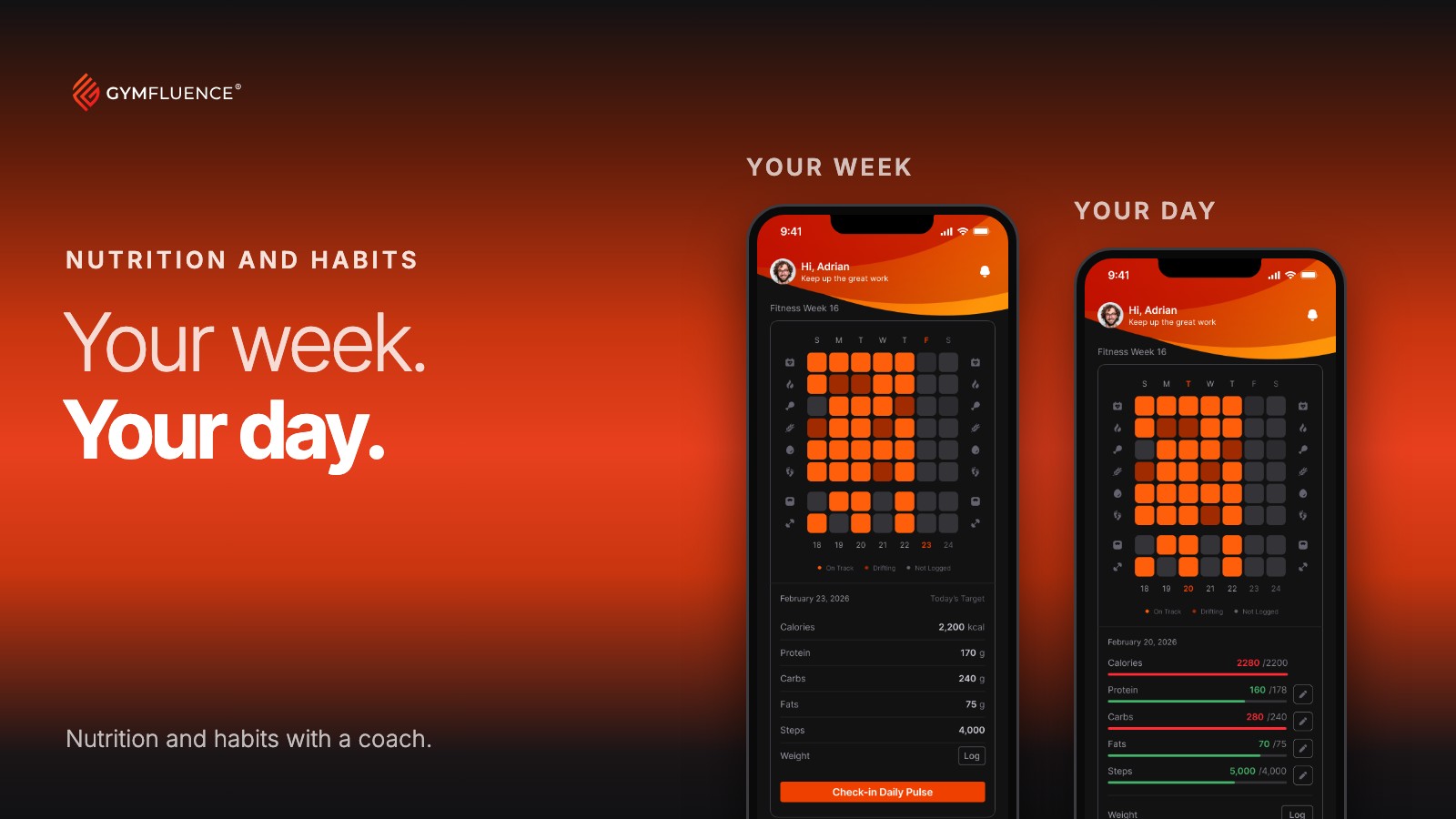
Gymfluence matches you with an independent coach for nutrition and habit support. Together, you can work on practical situations such as lunch at work, shopping and routines during a busy week. Your prescriber remains responsible for medical treatment; coaching does not replace a doctor or a registered dietitian when medical nutrition care is needed.
Through Gymfluence Verified, we assess the coach's background, competence and quality of support. This is Gymfluence's own quality status, not a professional or healthcare credential.
See how Gymfluence worksSources
Professional guidance provides background for this article. Everyday examples are suggestions to adapt. Citing these sources does not mean their authors have clinically reviewed Gymfluence's text. The sleep guidance is in Norwegian.